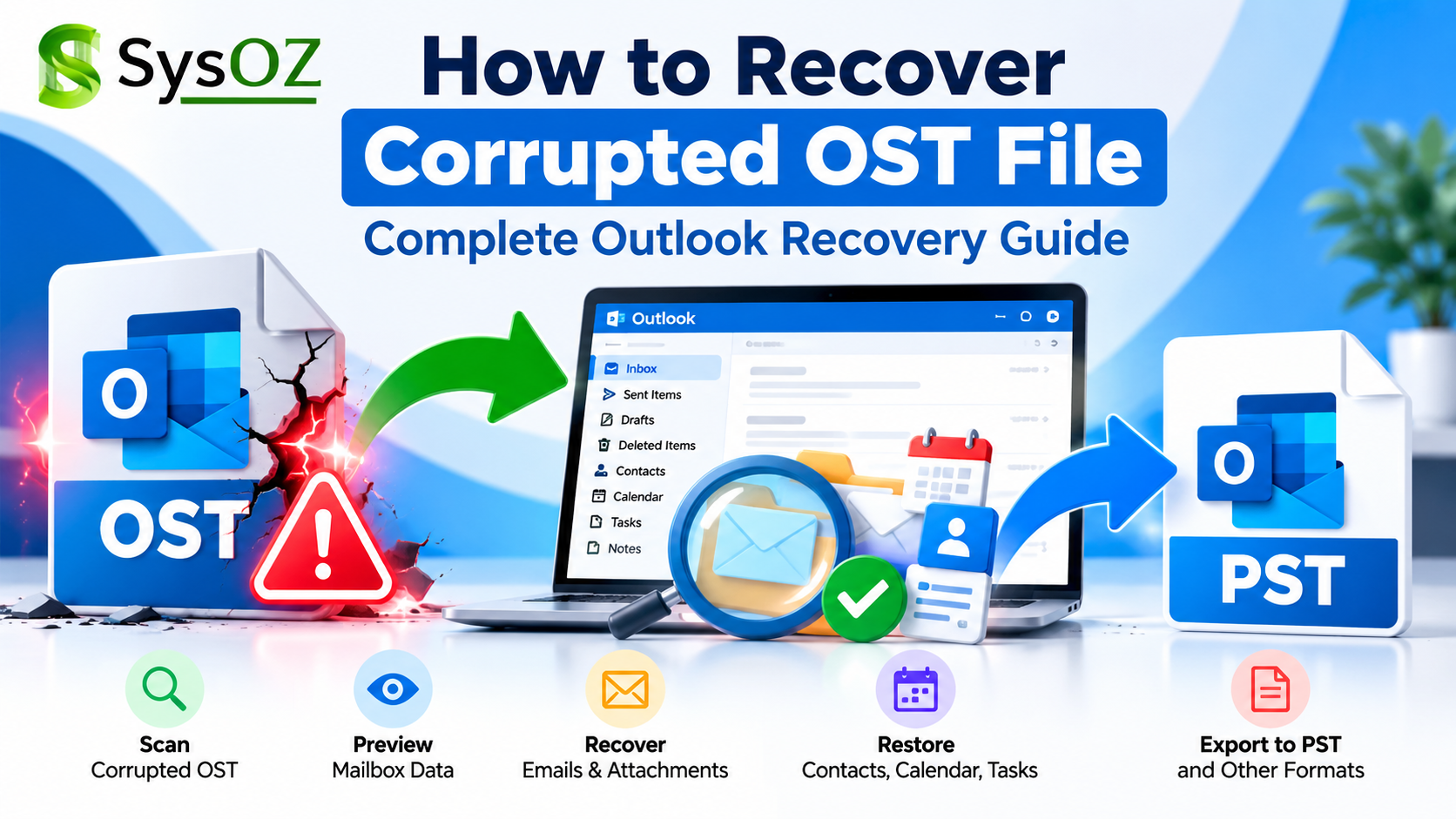
How to Recover Corrupted OST File – Complete OST File Recovery Guide
An OST (Offline Storage Table) file stores a synchronized copy of Outlook mailbox data associated with an Exchange or Microsoft 365 account. When an OST file becomes corrupted, damaged, or inaccessible, users may have difficulty accessing the emails and other mailbox information stored in it.
In such situations, an OST file recovery solution can help scan the available database, preview recoverable mailbox data, and save the selected information in a suitable format.
The actual recovery result depends on the condition and accessibility of the source OST file.
What Causes an OST File to Become Corrupted?
An OST file can become damaged or inaccessible for several reasons, including:
Sudden Outlook or system shutdown
Hardware or storage problems
Large or oversized OST files
Software or system errors
Synchronization problems
Damaged Outlook profile
File-system issues
Unexpected interruptions while Outlook is running
When an OST file is affected, Outlook may display errors or fail to access some or all mailbox data.
Signs of a Corrupted OST File
Some common symptoms include:
Outlook cannot open the OST file
Emails or folders are missing
Outlook repeatedly displays synchronization errors
Mailbox folders become inaccessible
Outlook becomes slow while accessing mailbox data
OST-related error messages appear
Outlook cannot synchronize mailbox information correctly
If important mailbox data is stored in the affected file, recovering the available information should be considered before making unnecessary changes to the original OST file.
How to Recover a Corrupted OST File
A structured OST recovery process can help identify and save available mailbox information.
Step 1: Locate the OST File
First, identify the OST file that contains the mailbox data you want to recover.
It is recommended to keep a backup copy of the original file before attempting recovery.
Step 2: Add the OST File
Open an OST recovery solution and select the required OST file.
The software can analyze the selected file and begin the scanning process.
Step 3: Scan the OST File
The recovery software scans the OST database and identifies available mailbox folders and items.
Depending on the condition of the source file, available information may include emails, attachments, contacts, calendars, tasks, notes, and other supported mailbox data.
Step 4: Preview Recovered Mailbox Data
Preview the available mailbox information before exporting it.
You can review folders and individual emails to determine which data is available for recovery.
Step 5: Select Required Data
Instead of exporting everything, select the mailbox folders or individual items you need.
Selective recovery can be useful when working with a large OST file.
Step 6: Export Recovered Data
After selecting the required information, choose an available output format and destination.
For users who need mailbox data in Outlook PST format, the recovered information can be exported to PST using supported OST recovery software.
Recover OST Data Without the Original Exchange Server
In some situations, the original Exchange environment or Outlook profile may no longer be available.
A dedicated OST recovery solution can allow users to work directly with a supported OST file, scan available mailbox information, preview the recovered data, and export selected items.
However, the available recovery depends on the condition of the source OST file.
Using SysOZ OST Recovery Software
If you need to recover data from a damaged, corrupted, or inaccessible OST file, SysOZ OST Recovery Software provides a guided recovery process.
The software is designed to scan supported OST files, preview available mailbox data, select required items, and export recovered information to PST and other supported formats.
Learn more about SysOZ OST Recovery Software:
What Data Can Be Recovered from an OST File?
Depending on the condition of the source OST file, available mailbox information may include: Emails, Email attachments, Inbox, Sent Items, Drafts, Contacts, Calendars, Tasks, Notes, Deleted Items, Other supported mailbox folders
The actual recovery result depends on the condition of the source file.
Can Recovered OST Data Be Saved as PST?
Yes. When the required mailbox information is successfully recovered, it can be exported to PST using supported recovery software. PST can be useful when you need to preserve mailbox information, migrate data, or access the recovered information through supported Outlook environments.
For a detailed conversion process, you can also read:
How to Convert OST File to PST
Tips to Avoid Further OST Data Loss
Before attempting recovery, keep these precautions in mind:
1. Make a backup copy of the original OST file.
2. Avoid repeatedly modifying the damaged file.
3. Make sure sufficient storage space is available.
4. Preview the recovered data before exporting.
5. Export only the required information when possible.
6. Save recovered PST files in a secure location.
Frequently Asked Questions
A supported OST recovery solution can scan a corrupted OST file and attempt to extract available mailbox information. The actual recovery result depends on the condition of the source file.
A dedicated recovery solution may allow you to scan and recover available data directly from a supported OST file without requiring the original Exchange Server environment.
Yes. Previewing available mailbox folders and items allows you to determine what data is accessible before exporting it.
If the email data remains accessible within the source OST file, supported recovery software may be able to extract and export the available messages.
Yes. Available recovered mailbox data can be exported to PST using supported OST recovery and conversion software.
Conclusion
A corrupted or inaccessible OST file can make Outlook mailbox data difficult to access. A structured recovery process can help identify available mailbox information, preview the recovered items, and export the required data.
SysOZ OST Recovery Software provides a guided approach for scanning supported OST files, previewing available mailbox data, selecting required items, and exporting recoverable information to PST and other supported formats.
Comments